When one looks at the career of a figure like Mao Zedong, leader of the Communist Party from the 1930s, then, in effect, despot for the new country he had been so instrumental in bringing into existence after 1949, one has to ask what sort of psychology he had. The testament of his doctor Li Zhisui showed a man who was lascivious, indifferent to regular sleeping habits, and sometimes heedless about his personal hygiene. He may have been an indifferent to callous husband – enduring the execution of one of his four wives, and the abandonment of another – but as a father he seemed kind and caring enough. In the early years too, he had the ability to be loyal to friends, though with time and greater power that faded fast. One thing that even the most cursory examination of his biography shows though is that this was a man who had been through more than enough to send him slightly insane. The violence, insecurity, and general chaos of his first half century on earth explained some of his paranoid and often cruel attitudes as he grew older. He did not come from an easy world, and unsurprisingly, did not end up as an easy person.
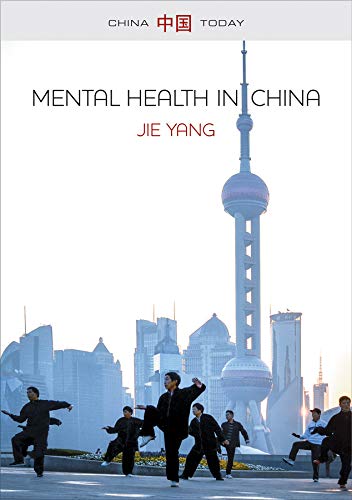
This is an extreme. But I was thinking about it as I read Jie Yang’s new, and very clear and concise, study, Mental Health in China (Polity Press, Cambridge, 2018). In Mao’s China, as she alludes to a number of times, people we would now understand to be schizophrenic, bipolar, or depressed, were mostly labelled as deviants, and more often than not dealt with with great cruelty. The stigma of having a mental health problem is something Jie Yang gives plenty of evidence of in China today. I remember direct experience of it, when living in a medical college in Hohhot, Inner Mongolia in the mid 1990s next door to a young woman who had a series of physical and speech disabilities, and was largely confined to home. The way that people talked about her, even medical professionals at the time, was laden with a sort of prejudice and fear., Oh, they would say, you live next door to that girl.
Jie Yang’s book is rich in the modern terminology of mental illness in China. Most of these conditions can be explained easily enough by the rapid economic development of the country since 1978, and the social and cultural changes these have entailed. With almost daily physical and material transformations, is it any surprise that people have ended up disorientated? Just as there is socialism, and capitalism, with Chinese characteristics, so there is a series of mental health issues with Chinese characteristics. Princess Syndrome (single female children of families spoilt to such a degree they demand multiple flats and other benefits before even considering marriage partners), `empty hearth syndrome’ (for cadres and others whose social usefulness means people only ever come to them with some practical design in mind rather than to know and understand them), and then very specific conditions like smog blues, unemployment syndrome, petitioning addiction, and the more easy to understand (but slightly dubious) internet addiction.
Mapping out these separate conditions gives a view of China that one doesn’t hear enough about. We are forever learning about economic and political and social conditions in China. But about the real toll that everlasting fast change and development has on the inner lives of the key actors involved – Chinese people – there has been precious little. The work at Harvard on Deep China from a few years back started to address this. Jie’s book continues it, and deserves to be read widely. Not the least of the reasons for this is the vignettes that are presented throughout the book of the suffering and trauma that so many suffer as a result of conditions that, at least in Europe and the US, are now understood better and have treatments available for.
Perhaps too we should accord China, and its leaders, a bit of mercy. From 1978, of course, the world has been assiduous in encouraging China to industrialise, and use capitalism. Half the deal was honest enough. This has made the country wealthier and more developed. But no ever did, or could, claim, that any of this would make Chinese people happier. And now they are learning, in a way just as hard and merciless as the rest of us, that being well off and living comfortable lives may make you live longer, and suffer less physical pain – but it surely doesn’t make you happier.

 Kerry Brown Reviews